Visit Yiwu ? Ask The Guide !
Yiwu, China.
Start up in Yiwu:
- 10 Steps from Registering WFOE trading company to Get working visa in Yiwu, China.
- Open / register a company in Yiwu China as foreigners (WFOE).
- Get work permit in Yiwu China.
- Case study: how much does it cost to have a WFOE company in Yiwu city, China. For 1 year, with 2 working permits / visas / shareholders?
- Common mistakes easily made when planning rent office in Yiwu for company/business registration.
Yiwu History:
YiWu, means loyal crow in Chinese, was a name from an old beautiful tale about crows helping good people.
Yiwu original name as Wushang, was founded in the Qin dynasty, at or about 222 BC. However, its long history flourished as early as the Neolithic Age.
Yiwu County first came into being in the year 624 AD, Tang dynasty, then lasted for a good 1,300 years. Till in May 1988, the 1300-year-old Yiwu County was upgraded to a upper-level named Yiwu City.
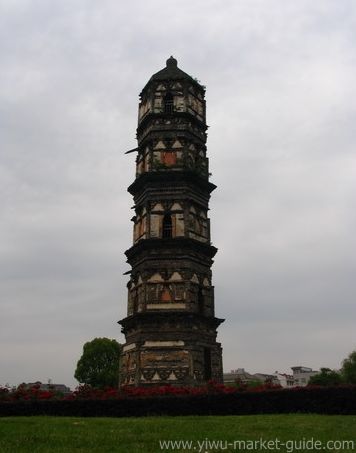
The long history left this city enough good stories and cultures like martial arts, Wu opera, and a 300-year-old Da An Si Pagoda in Xiuhu park.
Yiwu Location:
Yiwu is located in central Zhejiang province near the central eastern coast of China.
300 km south to Shanghai, 150 km west to Ningbo, 150km north to Wenzhou, and 100 km south to Hangzhou, the capital city of Zhejiang province.
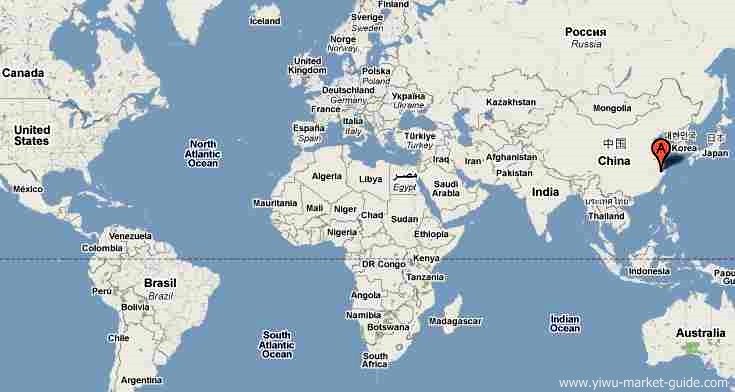 Yiwu is 1.5hrs Southwest to Shanghai, by train
Yiwu Climate:
Yiwu is located in the subtropical monsoon climate area with a warm and moist climate and clear seasonal distinctions. Yiwu weather is similar to London, Paris, Koeln, Maastricht, Geneva, and New York.
The average annual temperature is around 17℃, with the highest being 29.3℃ in July and the lowest 4.2℃ in January.
Yiwu Population:
Yiwu now has 716,000 local residents and over 1 million migrant workers, including around 40,000 foreigners from Korea, Mid-east, Africa South America, and other parts of the world. The total population reaches 1.8 million.
After long years of living in Yiwu and sourcing from Yiwu market, many foreigners already take Yiwu as their second hometown and play more and more important roles in local community. They can even take seats in Yiwu People's Congress, to have their saying on Yiwu policy-making.
Yiwu Arabs - An article about how Yiwu Arabs, a larger population than Shanghai Arabs, working/trading and living in Yiwu.
Yiwu Economy:
Yiwu economy is one of the fastest growing ones in China after national opening-up. Something similar to Shenzhen. The streets, which were dirty and scattered with cow dungs 20 years go, now are packed with BMW7 series and Benz. More about Yiwu economy
Yiwu fair also contributes a lot to Yiwu's economy success. Yiwu now is one of the Top 10 exhibition cities in China. Yiwu market guide also offers a one stop service for Yiwu fair.
Yiwu Transportation:
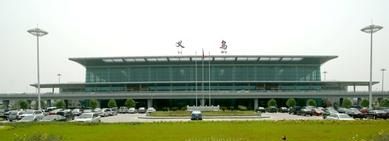 Yiwu Airport
Yiwu airport is a 4C grade airport carries over a dozen air routes to Beijing, Guangzhou, Shenzhen, Shantou, Changsha. This airport even had HK-Yiwu direct flights for several months last year. The facilities are qualified for international flights. Hongkong to Yiwu non-stop flight is carried yearly.
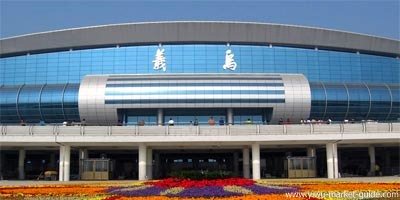 Yiwu Train Station
Yiwu train station is one of the most advanced medium-sized train stations in China. There are thousands of trains pass Yiwu every day. Shanghai to Yiwu fast trains just needs 1.5 hours.
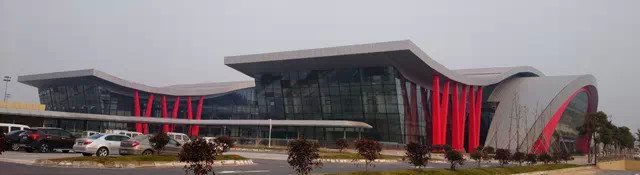 Yiwu Long Distance Bus / Coach Terminal: Guo Ji Shang Mao Cheng Station
Yiwu bus stations have hundreds of buses travels from Yiwu to 9+ provinces, to Shenyang in the very north part of China.
There are lot of buses from Shanghai Pudong (PVG) air port to Yiwu and from Hangzhou airport(HGH) airport to Yiwu.
Yiwu Sightseeing:
There are not much to see in Yiwu except the huge whole marketplace - Futian market. Nearby place like Hengdian(Chinese Holleywood) and Hangzhou are good for sightseeing.
If you have to see something in Yiwu except market, you can go to Yiwu Xiuhu Lake Park, Yiwu Riverside Park, Yiwu Wetland Park are my three recommendations. They're all inside the city and very easy to go. You can read them on Yiwu sightseeing . Here are some Yiwu Photos for you now.
Yiwu Food:
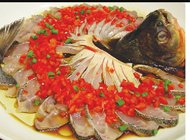
Chinese food, Islamic / Halal restaurants, Korean restaurants, Indian restaurants, Brazilian restaurants, Japanese restaurants... most of them run by people from their own countries. Plenty!
Of course there are also plenty of traditional Chinese restaurants and Western restaurants. And you'll also have to try some REAL Yiwu food. Here is a separate article for Yiwu Restaurant !
Yiwu City Tree, City Flower:
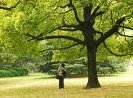 Yiwu City Tree - Camphor
 Yiwu City Flower - China Rose
According to Yiwu government, there are one over 1000-year-old, four over 800-year-old, 103 over 200-year-old, and over one thousand 100-year-old camphor trees in Yiwu.The ever greenness of camphor tree symbolizes flourish and forever prosperity.
Yiwu city flower china rose Yiwu has a long history and outstanding technology of growing China roses. Colorful China roses are blossoming all year round, which also symbolizes long-lasting prosperity. They are widely planted.
Yiwu Local Culture:
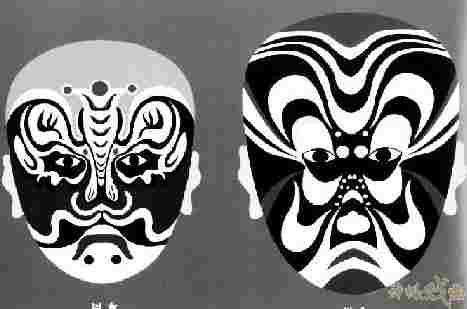 Wu Opera
 Martial Arts
Wu Opera also known as Jinhua Opera, is one of the oldest operas (has a 400-year history) in China. The earliest days of Wu opera can be traced back to Ming Dynasty(AD1386-AD1683). The name originated from Wuzhou, the former name of Jinhua.
Yiwu markets made Yiwu famous in China in the last 30 years. Yiwu international trade city made Yiwu famous around the world in the last 8 years. However, Yiwu Martial Arts has kept Yiwu famous in China for more than a thousand years.
Yiwu Religion:
As time goes by, Buddhism, Muslim, Christian are all becoming more and more important. Along with more and more foreign businessmen come and settled in Yiwu, their religions and culture also got developed in Yiwu. There are even several big churches in Yiwu China now.
Yiwu Travelogues:
Here are some interesting travelogues by Yiwu visitors. Read to see how is Yiwu like in their eyes.
- A Peep at Yiwu's Christmas Decorations: - Jump on the fast train heading south from Shanghai and two and a half hours later you will hit the market town of Yiwu. A holiday shopper’s paradise...
- Consumers Need Yiwu Junk - I got to take my second trip to Yiwu last month. The goal was to find some prices and samples for Mardi Gras beads—that’s right...
Contact Us:
*You can either email us at: YiwuMarketGuide@gmail.com;
Or leave us a message via below contact form;
Or WhatsApp us by the code at bottom of this page, or via mobile phone number +86 159 2428 6660, from 9am to 5pm(China time);
Or visit us at: F2, 2-7, Huan Qu Yi Da (Yiwu Global Reach) Supply Chain Park, Yiwu City, Zhejiang Province, China.
Call us when Urgent:
Phone/WhatsApp/WeChat: +86-15924286660
( 9:00 - 17:00, Working Days )
 Scan this code to Ask Jack on WhatsApp
>> Back to homepage.
Recent Articles


-
10 Steps to Register WFOE Trading Company in Yiwu, And Get Visa
Jan 30, 26 04:43 AM
 How to register a WFOE trading company in Yiwu, China? And Get Visa? Here are the 10 steps, by an expert. With a PDF version free download. Check in now!
 -
Visit Yiwu? Ask The Guide!
Jan 07, 26 05:53 AM
 Are you going to visit Yiwu in China? Where the largest wholesale market is located. Or, Are you visiting Yiwu right now? Ask the guide. See what he may help!
 -
Common Mistakes When Renting Office in Yiwu to Register Company
Dec 04, 25 06:22 AM
 Here are Common mistakes can be easily made when registering a company in Yiwu: can use virtual address? can pay monthly? can be same address? The answer!
Market Broadcast:
Discover the newly opened district 6 of Futian market in Yiwu, China!
Market App.

Supplier spotlight:



Price Lists




See Also:
Yiwu Hotels Near Futian Market (International Trade City)
News:
12 Oct., 2011:
Having A Company In Yiwu Is Becoming Easier.
22 Sep., 2011:
Yiwu Is Protecting Intellectual Property.
13 Sep., 2011:
Air China Flies from Beijing to Yiwu Directly.
19 Jul., 2011:
Fiji Minister Visited Yiwu.
16 Jul., 2011:
Yiwu Port is Taking Shape.
20 Jun., 2011:
Hong Kong to Yiwu flights 2011.
29 Mar., 2011:
Yiwu Becomes 10th Special Economic Zone in China.
11 Mar., 2011:
New Exhibitions Are on the Way in Yiwu.
20 Feb., 2011:
Labor Shortage after Chinese New Year Holiday in Yiwu China.
02 Feb., 2011:
Total Foreign Companies in Yiwu Reached 3,008 by 2010.
15 Jan., 2011:
Yiwu Manufactures Attended 63 World Top Exhibitions in 2010.
08 Jan., 2011:
Low temperature affects Yiwu electricity power supply.
24 December, 2010:
Yiwu Sells Over 17 Million USD Products Each Day.
23 September, 2010:
Yiwu GDP Reached 4 Billion USD after Q2, 2010.
16 September, 2010:
Brazil-China Commerce Association Visited Yiwu for Invest Opportunities.
11 September, 2010:
Mayor of Parramatta, Australia Visited Yiwu.
16 July, 2009:
Yiwu Customs Opened.