Visit Yiwu ? Ask The Guide !
How to Get Custom Socks Made in China: A Practical Guide from Yiwu
Nov,16,2026 | YMG Team | Yiwu, China
 Customize socks in China
A while ago, we received a sourcing request from a customer in the United States who wanted to find a suitable supplier in China to produce custom socks for their own brand.
At first glance, socks may seem like a very common product. But once we started looking for suppliers, we realized that the process of sourcing custom socks is not as simple as it may appear.
From supplier selection and logo customization to sizing, fabric choices, MOQ (minimum order quantity0, and sampling, every step can affect the final product and the overall sourcing experience.
To help more overseas buyers who are planning to source custom socks in China, we are sharing some of the information we collected during our market visits in Yiwu. We hope it will be helpful for your own sourcing process.
Ⅰ. Where Are Socks Mainly Sourced in China?
If you are planning to source socks in China, Zhejiang Province is one of the most important regions to pay attention to.
For most overseas buyers, Yiwu International Trade City and Datang in Zhuji are two of the most frequently mentioned places.
1. Yiwu International Trade City
If you visit Yiwu, you can start with the first floor of District 4 of Yiwu International Trade City. This area has a large number of sock suppliers, covering basic cotton socks, sports socks, children’s socks, business socks, gift socks, and different styles of custom products.
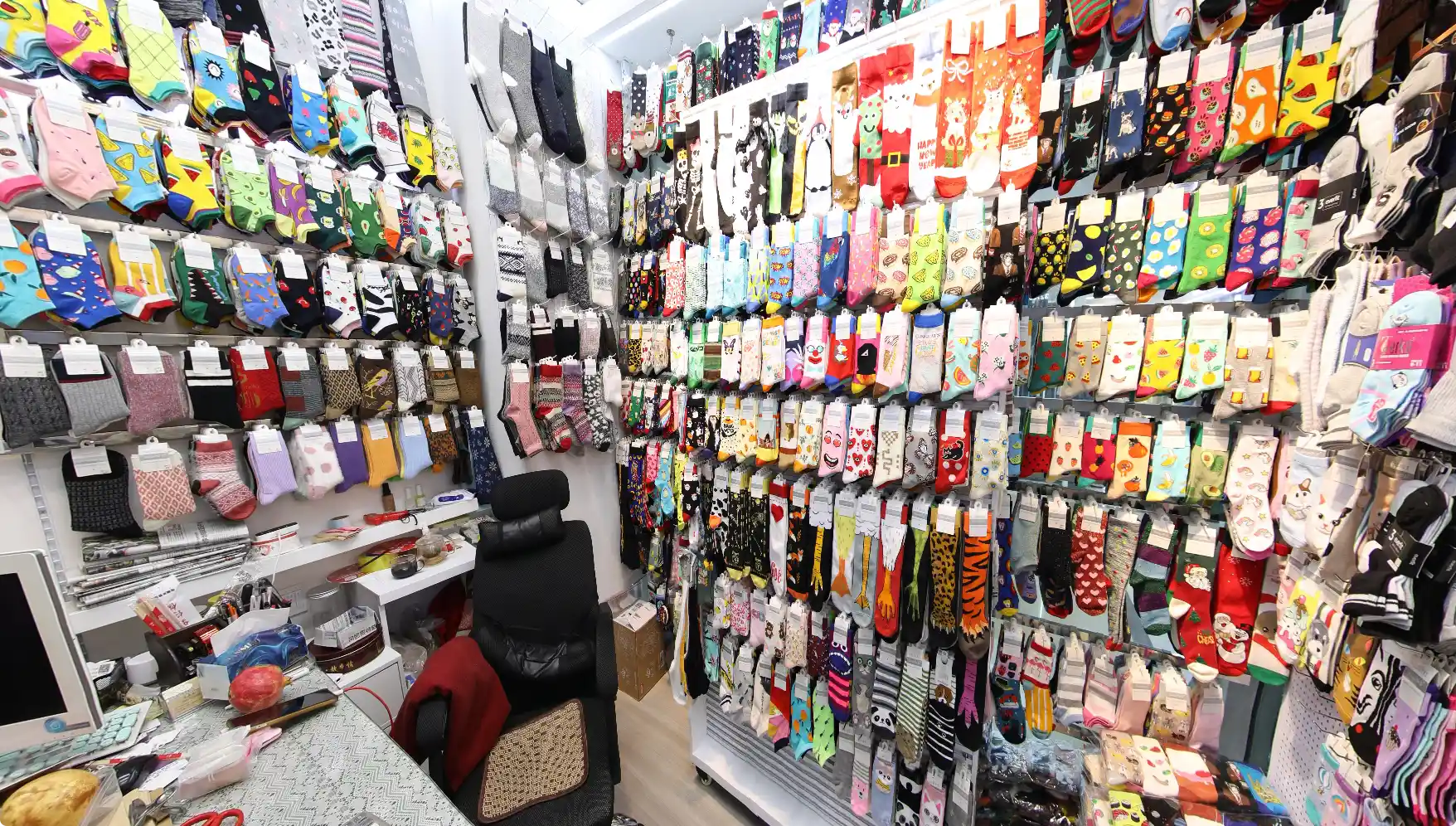 Yiwu International Trade City is one of the best places to compare sock suppliers in China.
For first-time buyers in China, Yiwu’s biggest advantage is not only the variety of products, but also the ability to compare different suppliers, products, workmanship, and quotations in one place without contacting factories one by one.
During our visit, we found that many suppliers not only sell ready-made products, but can also provide brand customization services, including logo customization, color adjustments, packaging design, and OEM/ODM production.
2. Datang, Zhuji
If your order quantity is larger, or if you already have a clear product direction and want to look for professional factories, Datang in Zhuji is also worth considering.
Datang is a well-known hosiery manufacturing cluster in China, with many professional sock factories that have long-term experience in OEM and ODM production for domestic and international brands.
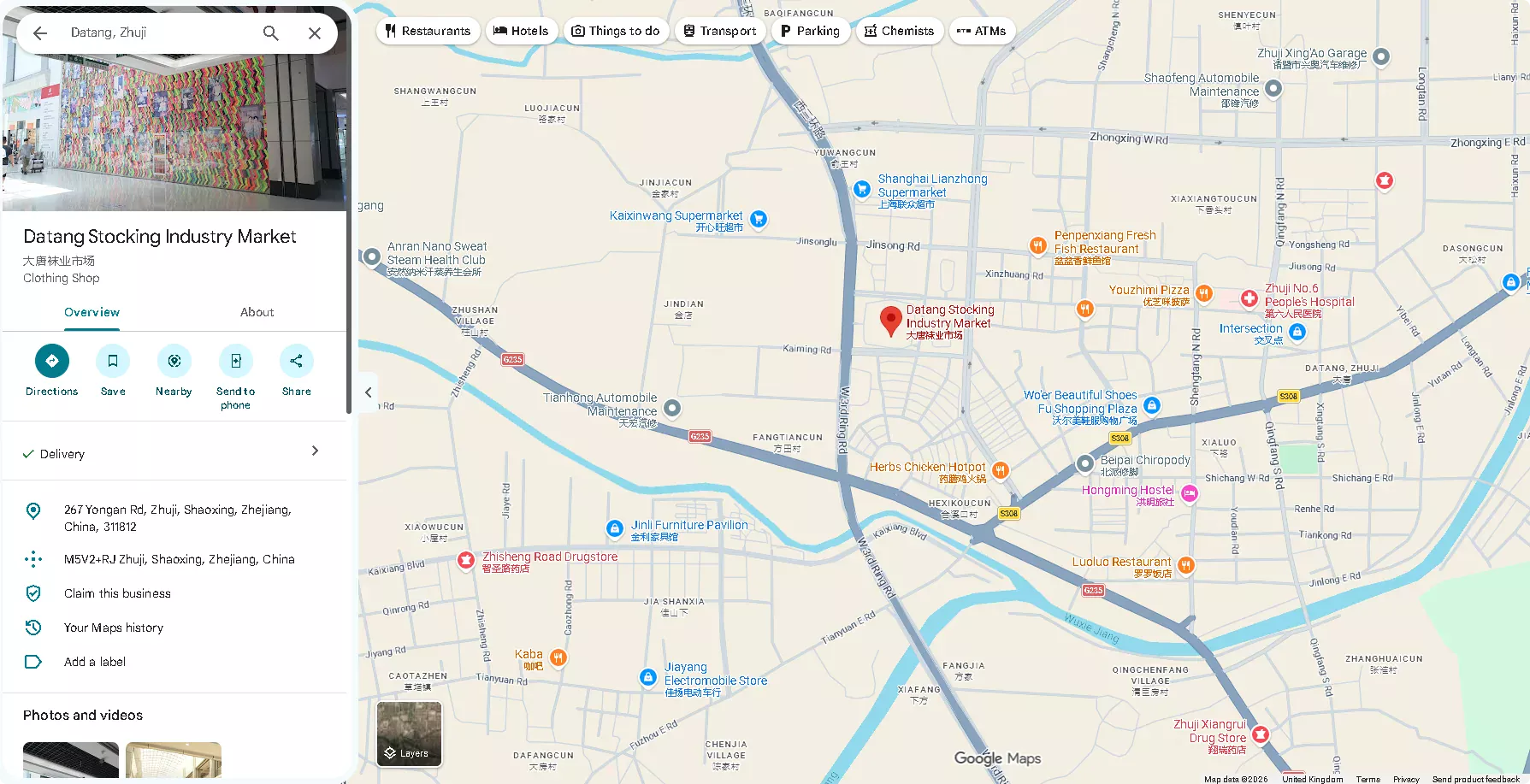 Datang in Zhuji is one of China’s key hosiery sourcing and manufacturing areas.
In simple terms, our understanding is:
- Yiwu is better for comparing products, finding suppliers, and doing market research.
- Datang is better for moving further into factory sourcing and mass production.
Ⅱ. How Should You Choose the Logo Customization Method?
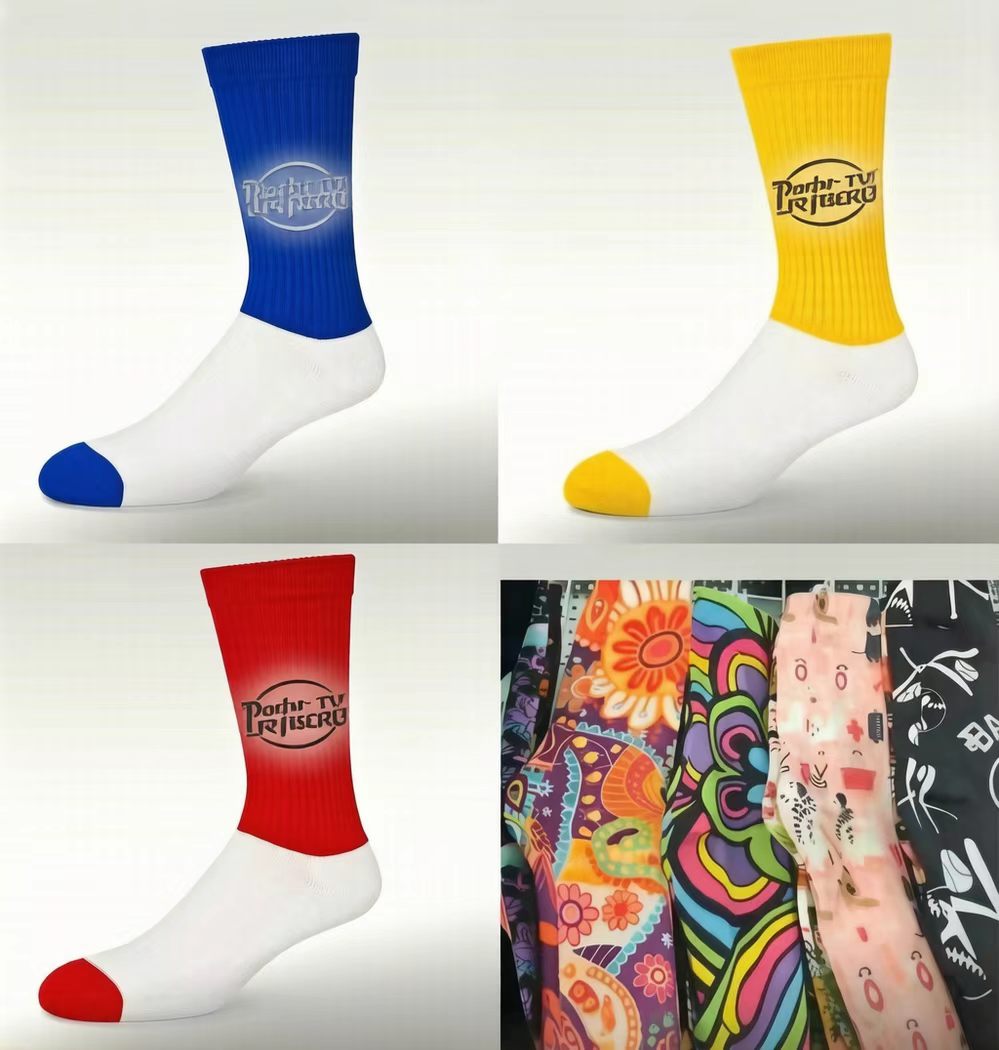 Customize logo on socks
When speaking with different suppliers, we found that many buyers first focus on price, but once the discussion becomes more detailed, the most important topic is often the logo method.
The three most common sock logo customization methods are jacquard, heat transfer, and embroidery. Each method suits different branding goals and product positioning.
1. Jacquard
Jacquard is one of the most common methods used in sock customization.
Instead of printing the logo on the surface, the design is knitted directly into the sock during production using different colored yarns.
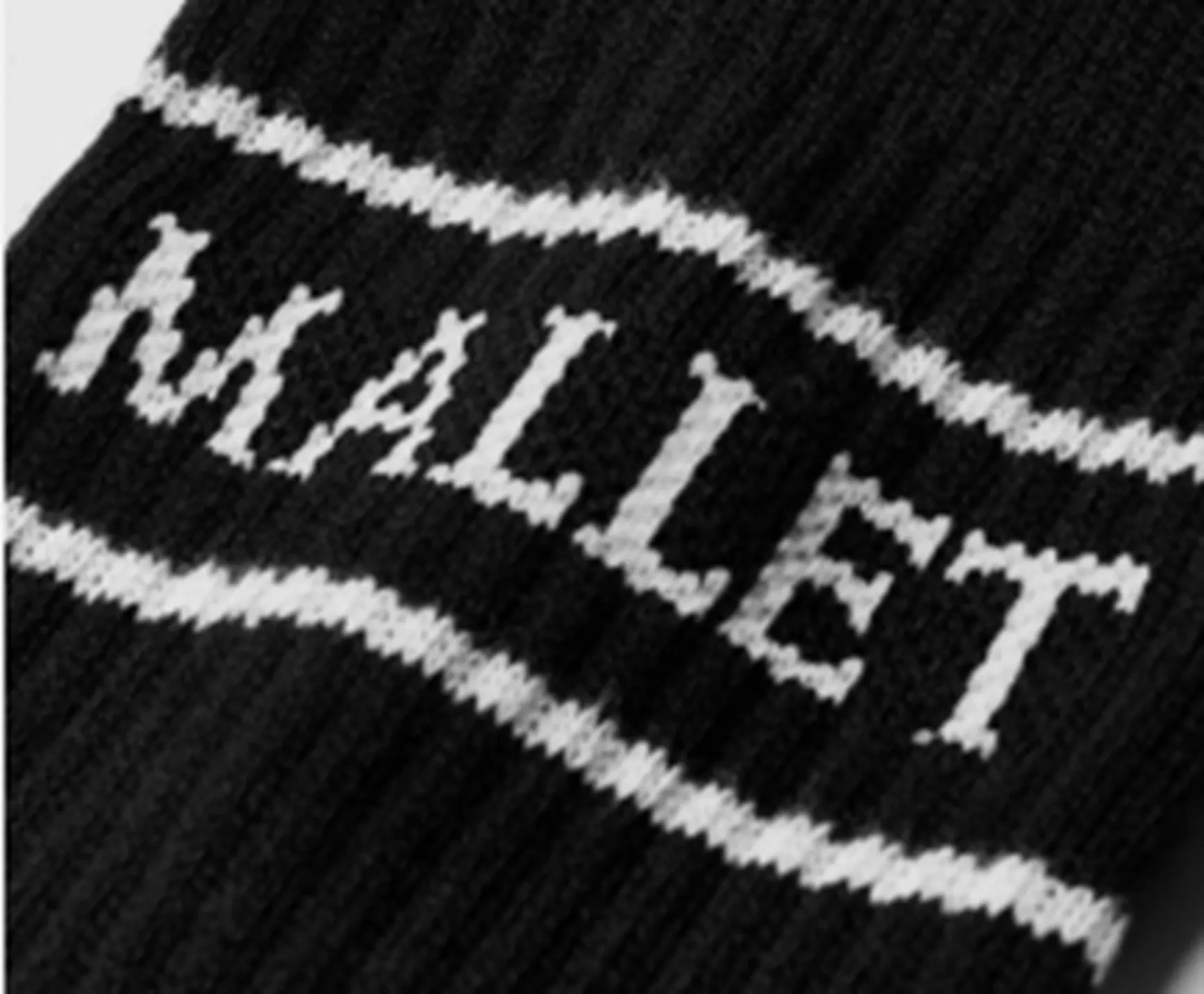 Jacquard socks weave the logo directly into the fabric for a durable finish.
Advantages:
- The logo is not easy to fall off
- Durable and washable
- Comfortable to wear
- Suitable for long-term brand use
Disadvantages:
- Design complexity is limited by machine gauge
- Not suitable for very fine details
- Gradient colors are difficult to reproduce
Best for:
- Brand logos
- Sports socks
- Everyday socks
- Long-term retail products
2. Heat Transfer
Heat transfer involves printing the design onto a transfer film first, and then applying it to the sock surface using heat and pressure.
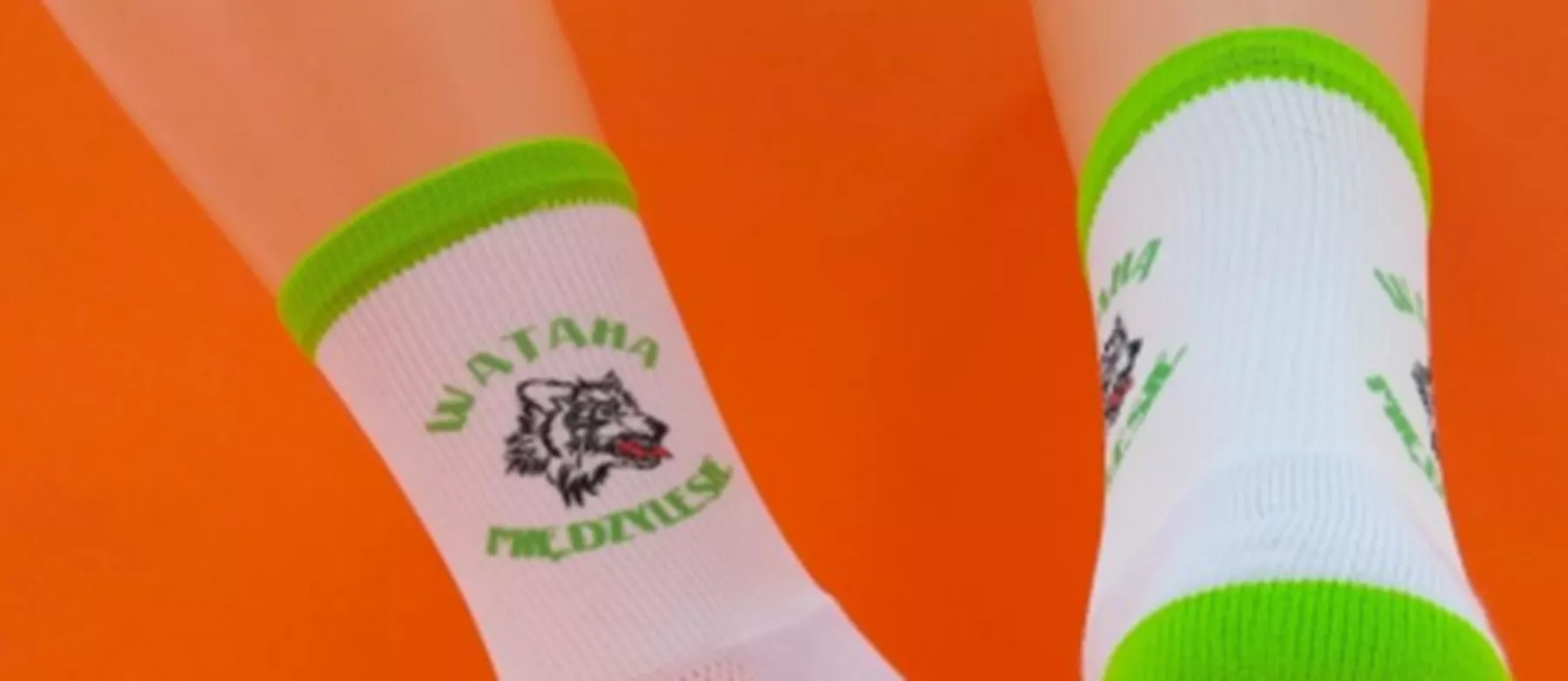 Heat transfer printing can show more colors and detailed artwork on socks.
Advantages:
- Rich colors
- Clear image details
- Can handle complex designs
- Good for multi-color logos
Disadvantages:
- May have a slight film-like feel
- Can crack when stretched
- May wear out after repeated washing
Best for:
- Multi-color logos
- Promotional items
- Personalized designs
- Complex artwork
3. Embroidery
Embroidery is done after the socks have been knitted, using embroidery machines to stitch the logo onto the sock surface.
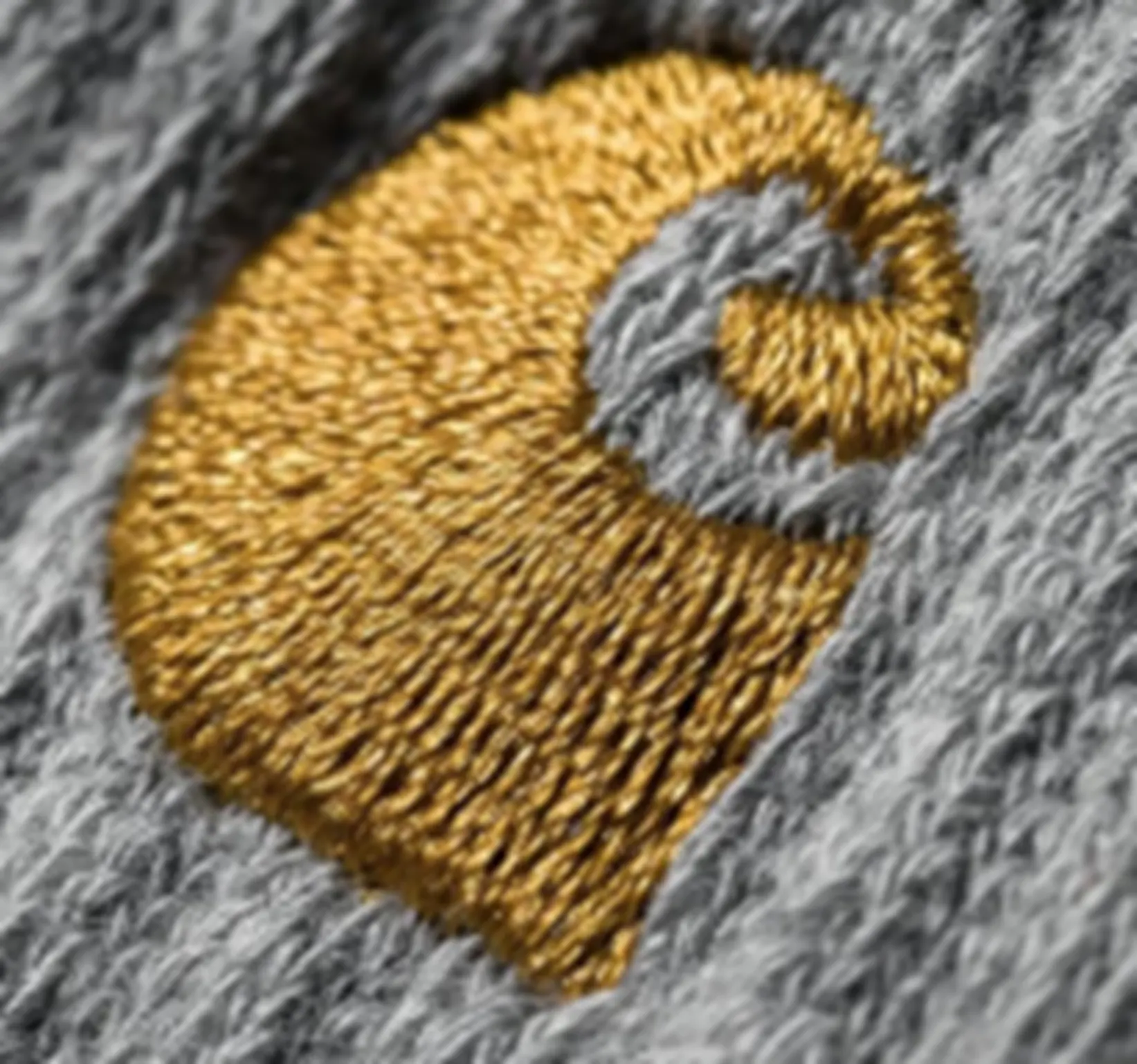 Embroidery gives socks a more premium and dimensional brand look.
Advantages:
- Strong three-dimensional effect
- More premium brand appearance
- Better visual impact
Disadvantages:
- Usually higher cost
- Very small or complex details may not come out well
- Backside thread lines may affect comfort
Best for:
- Brand logos
- Simple text
- Fashion products
- Premium-positioned products
Which One Should You Choose?
- If durability is your top priority, jacquard is usually the safest choice.
- If your logo has many colors or a more complex design, heat transfer is often more suitable.
- If you want a stronger premium brand feel, embroidery is a good option.
In actual sourcing, the best approach is to ask suppliers for samples in different methods and then make your final decision based on branding needs and budget.
Ⅲ. Sock Sizing Is More Than Just Shoe Size
Many overseas buyers only tell suppliers their shoe size when sourcing socks. In practice, that is usually not enough.
Because sizing standards vary from country to country, it is important to confirm more detailed size information before production starts.
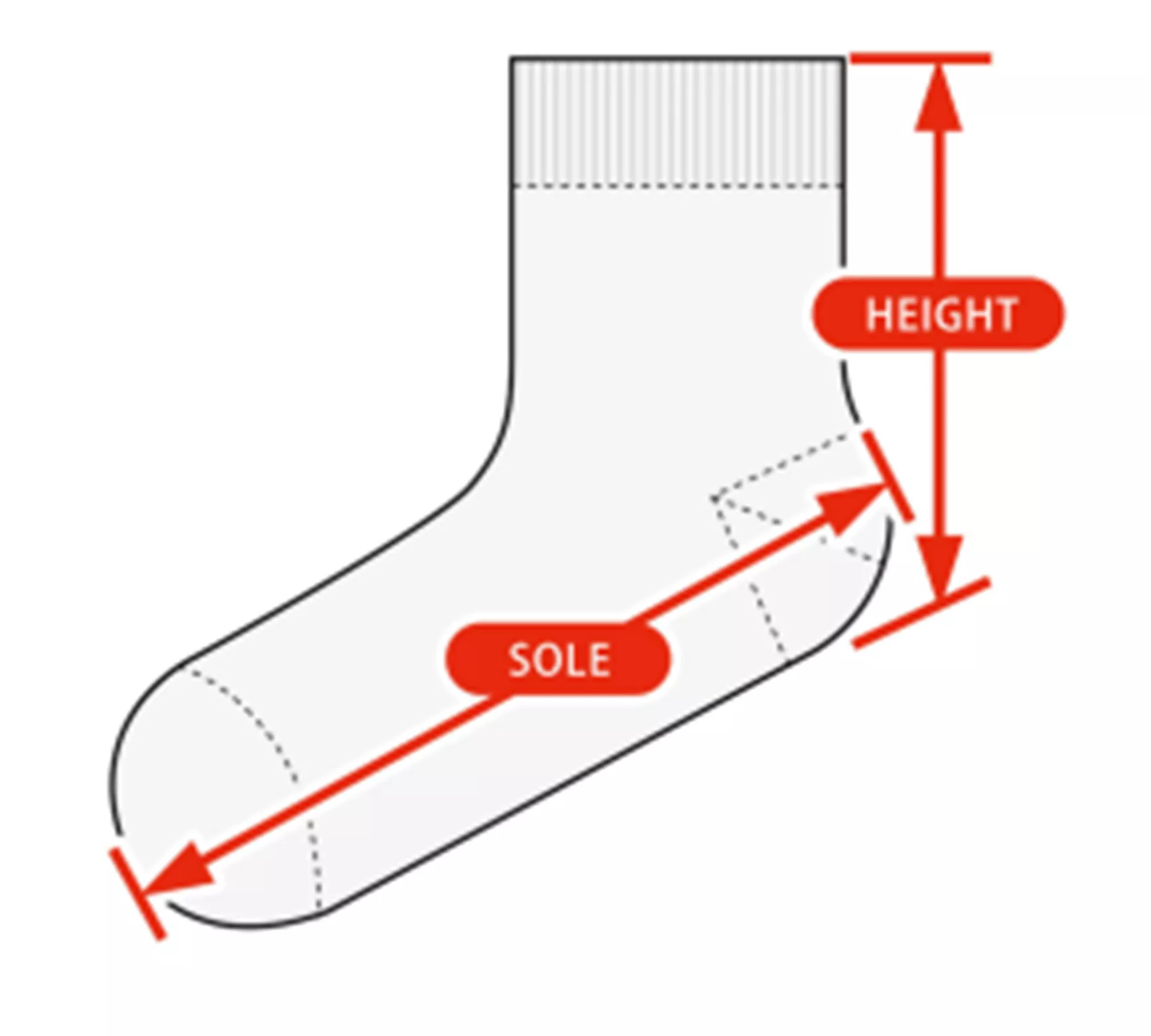 When sourcing custom socks, buyers should confirm both sole length and sock height before production.
It is usually recommended to confirm the following measurements:
- Sole length
- Height
- Cuff width
- Target shoe size range
If you already have a reference sample, it is even better to send it to the supplier.
For factories, a physical sample is often easier to understand than a written description, and it can help reduce misunderstandings later.
Ⅳ. Fabric Choice Affects More Than Comfort
Many people think socks are simply made of cotton. In reality, most socks are made from a blend of different materials rather than a single fabric.
Different fabric combinations affect comfort, durability, stretch, and cost.
Common materials include:
|
Material Cotton Polyester Nylon Spandex Bamboo Fiber Wool |
Typical Features Soft, breathable, and absorbent Durable and quick drying Strong and wear-resistant Adds stretch and elasticity Soft touch and better moisture management Better warmth and insulation |
In actual production, different brands usually choose different material ratios based on product positioning in order to balance comfort, durability, stretch, and price.
Ⅴ. Four Sock Samples We Found in Yiwu: Construction and Finishing
During our visit to Yiwu Market, we came across four sock samples with different constructions and finishing methods.
It is worth noting that these terms describe different aspects of sock manufacturing.
For example, plain knit refers to the basic knitting structure, while jacquard describes how patterns are knitted into the fabric. Terry and half terry refer to looped cushioning structures, whereas brushing is a fabric finishing process.
1. Plain Knit Socks with Jacquard Design
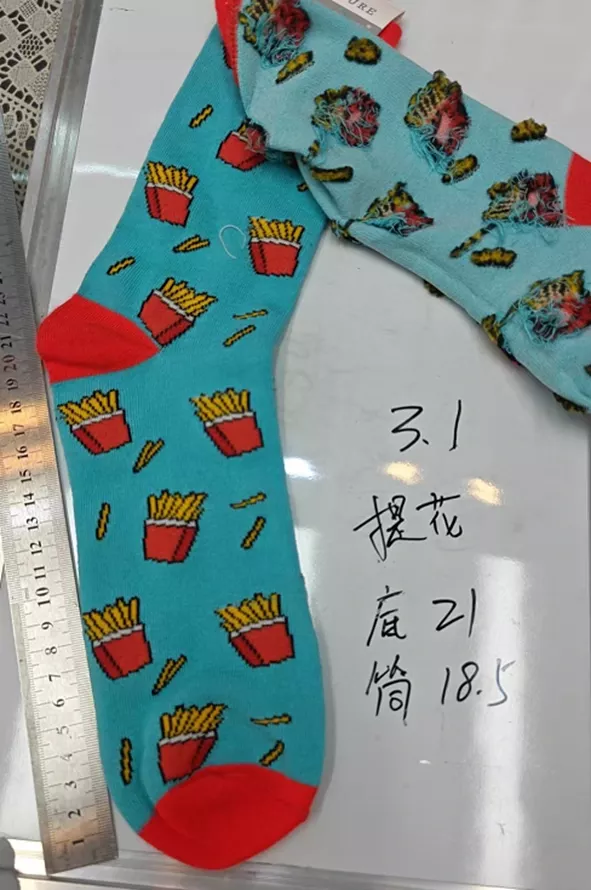 This supplier quoted 3.1 RMB per pair for a jacquard sock sample with MOQ 1,000 pairs.
- Sock construction: Plain Knit
- Logo/pattern method: Jacquard
- Sole length: 21 cm
- Sock height: 18.5 cm
- Quoted price: RMB 3.10/pair
- MOQ: 1,000 pairs
2. Half Terry Socks
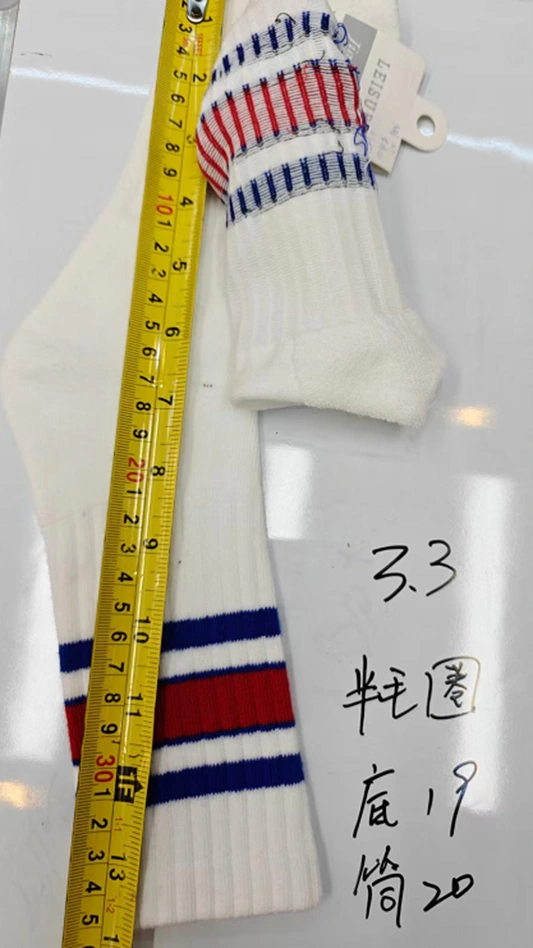 This half terry sock sample was quoted at 3.3 RMB per pair with a minimum order quantity of 1,000 pairs.
- Construction: Half Terry
- Sole length: 19 cm
- Sock height: 20 cm
- Quoted price: RMB 3.30/pair
- MOQ: 1,000 pairs
3. Brushed Socks
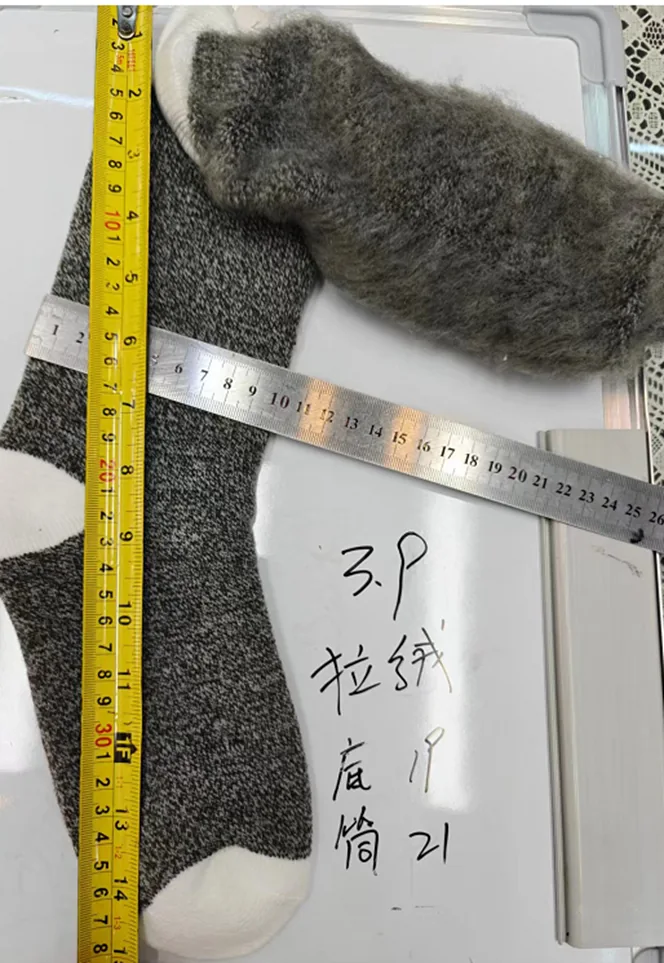 This brushed sock sample was quoted at 3.9 RMB per pair with MOQ 1,000 pairs.
- Finishing method: Brushed
- Sole length: 19 cm
- Sock height: 21 cm
- Quoted price: RMB 3.90/pair
- MOQ: 1,000 pairs
4. Terry Socks
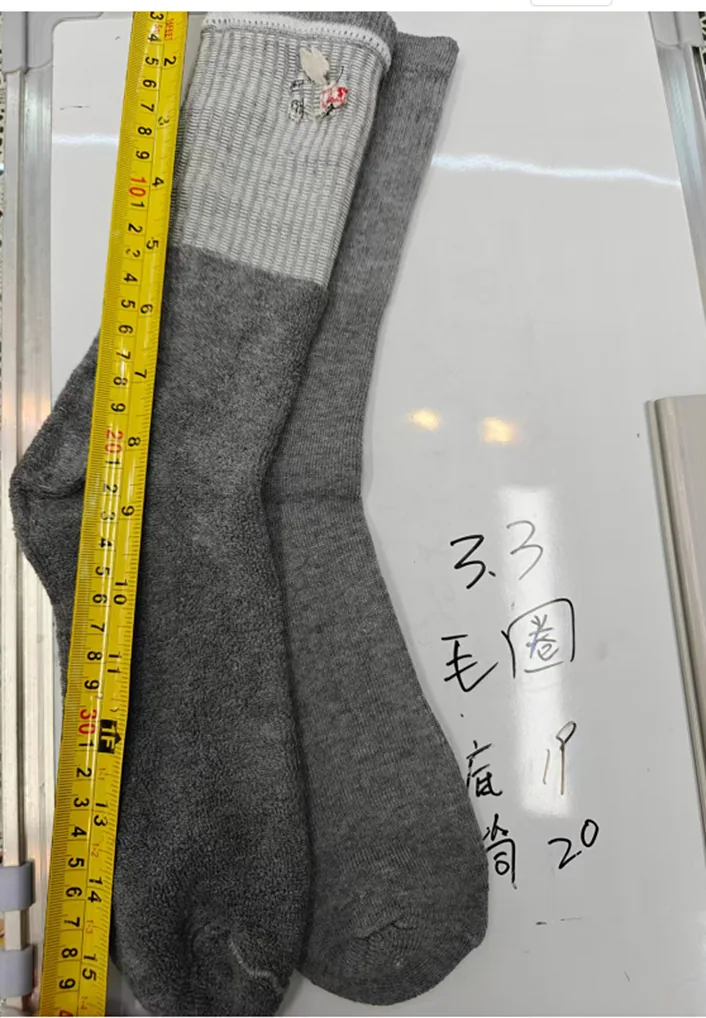 This terry sock sample was quoted at 3.3 RMB per pair with MOQ 1,000 pairs.
- Construction: Terry
- Sole length: 19 cm
- Sock height: 20 cm
- Quoted price: RMB 3.30/pair
- MOQ: 1,000 pairs
These samples show how different knitting structures and finishing methods can affect the feel, thickness, and cost of socks.
When requesting quotations, buyers should specify not only the logo design but also the sock construction, material composition, measurements, and other product requirements.
Note: All prices and MOQs are supplier quotations collected during our Yiwu market visit. They are provided for reference only and should be reconfirmed before ordering.
Ⅵ. What Should You Prepare Before Requesting a Quotation?
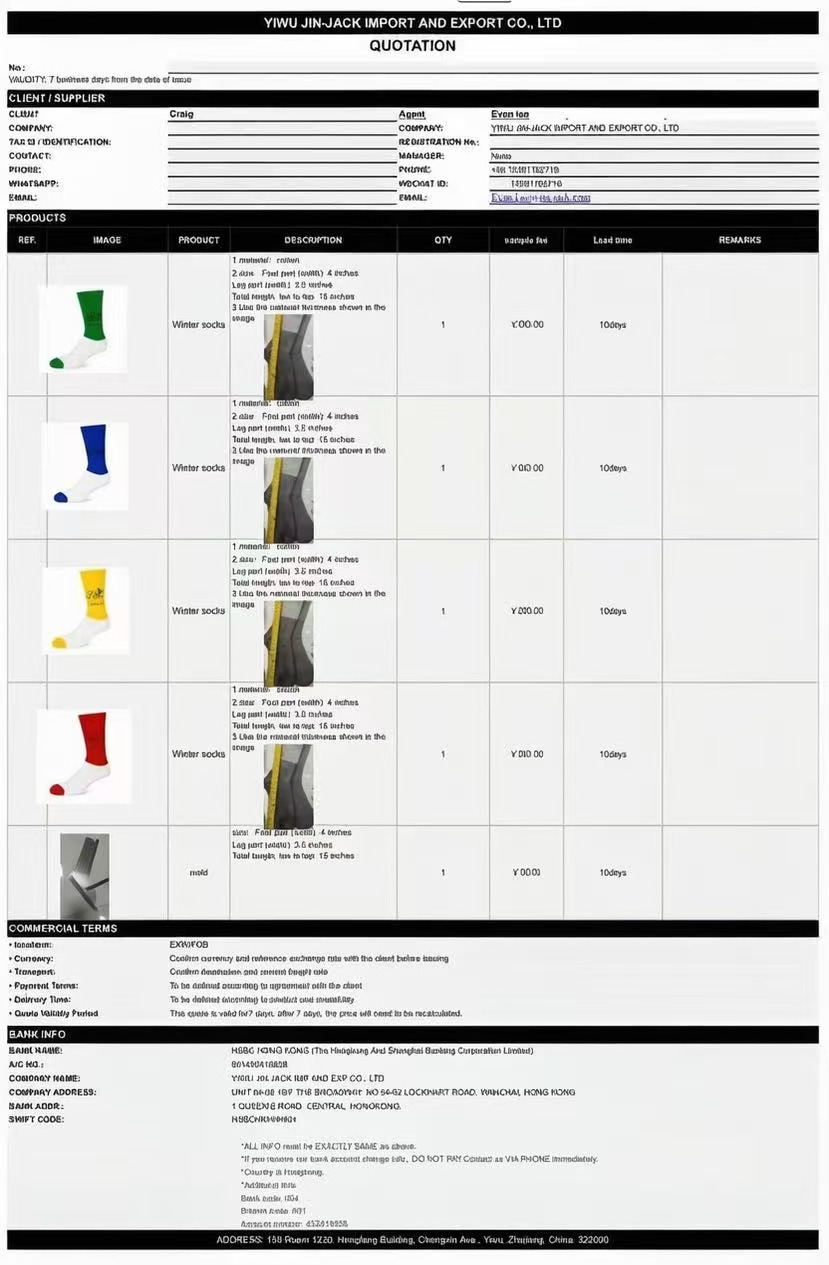 A custom socks sample quotation we made for our client from USA | November, 2026 | Yiwu, China.
After comparing different sock samples and speaking with suppliers, we realized that one of the most important steps in custom sock sourcing is preparing a clear product specification before requesting a quotation.
For custom socks, simply providing a logo and asking for a price is usually not enough. Suppliers need to understand exactly what kind of socks you want to produce.
Here is a checklist of information worth preparing in advance:
1. Sock Style and Construction
Specify the type of socks you need, such as plain knit, half terry, or terry socks. If you want a brushed finish, make sure to mention it separately.
2. Logo Customization
Prepare your logo artwork and indicate your preferred customization method, such as jacquard, heat transfer, or embroidery.
3. Size Specifications
Provide the sole length, sock height, target shoe size range, and other relevant measurements. A physical reference sample can also help.
4. Material Composition
Specify your preferred materials and fiber percentages, such as cotton, polyester, nylon, and spandex.
5. Colors and Design
Confirm the sock colors, logo colors, design placement, and any other visual requirements.
6. Order Quantity and Packaging
Provide your estimated order quantity, packaging preferences, and any individual labeling requirements.
7. Expected Delivery Time
Let the supplier know your expected production and delivery schedule.
The more clearly these details are communicated, the easier it is for suppliers to understand your requirements, provide comparable quotations, and prepare samples for approval.
Ⅶ. Our Main Takeaway
After this sourcing experience, one thing became particularly clear to us:
When customizing socks, choosing the right sock construction is just as important as choosing the right logo customization method.
A logo can be knitted into the fabric using jacquard, transferred onto the surface, or added through embroidery. Meanwhile, the sock itself can have different constructions, such as plain knit, half terry, or terry, and may also undergo additional finishing processes like brushing.
These choices affect different aspects of the final product, including its appearance, thickness, texture, comfort, and production cost.
For overseas buyers, it is important to communicate both sets of requirements clearly rather than focusing only on the logo or the unit price.
A well-prepared product specification makes it easier to compare suppliers and reduces the risk of misunderstandings during sampling and production.
Sourcing custom socks in China involves more than finding a supplier with a suitable price. Buyers also need to understand the available product options, logo customization methods, sock constructions, materials, and sizing requirements.
For buyers visiting Yiwu, the market offers an opportunity to compare different sock styles, examine samples, and communicate directly with suppliers. If you need to explore manufacturing options further, Datang in Zhuji is another location worth considering.
We hope the information and supplier references from our Yiwu market visit will help you make more informed decisions when sourcing custom socks in China.
Whether you are still comparing product options or preparing to place a custom order, taking the time to confirm your specifications before production can make the entire sourcing process much smoother.
Frequently Asked Questions
1. Where should I source custom socks in China: Yiwu or Datang?
Yiwu is a good starting point for buyers who want to explore different sock styles, compare suppliers, and review product samples. Datang in Zhuji is another important hosiery center, particularly for buyers looking to explore manufacturing options and establish factory relationships.
2. What logo customization methods are available for custom socks?
The three common methods are jacquard, heat transfer, and embroidery. Jacquard knits the design directly into the fabric, heat transfer applies printed artwork to the sock surface, and embroidery stitches the logo onto the finished sock.
3. What is the difference between jacquard and terry socks?
Jacquard refers to a knitting method used to create patterns with different colored yarns. Terry refers to a knitted structure with looped yarn that provides additional cushioning. They describe different aspects of sock manufacturing and should not be treated as interchangeable terms.
4. What is the difference between half terry and brushed socks?
Half terry socks have looped cushioning in selected areas of the sock, while brushed socks undergo a finishing process that raises fibers on the fabric surface to create a softer, fuzzier texture. These are two different manufacturing processes.
5. What is the typical MOQ for custom socks in China?
MOQs vary depending on the supplier, sock construction, materials, design, and customization requirements. During our Yiwu market visit, the four sock samples we reviewed were quoted with an MOQ of 1,000 pairs each. Buyers should confirm the actual MOQ with suppliers for their specific requirements.
6. What information should I provide when requesting a custom sock quotation?
You should prepare your logo artwork, sock style and construction, material composition, size specifications, color requirements, packaging preferences, estimated order quantity, and expected delivery schedule. Providing a reference sample can also help suppliers understand your requirements.
Related Links:
Contact Us:
You can also reach us through any of the following channels:
- Email: YiwuMarketGuide@gmail.com
- Contact Form: Leave us a message using the contact form below.
- WhatsApp: Contact us using the WhatsApp code below.
- WeChat: Contact us using the WhatsApp code below.
- Phone: +86 159 2428 6660
Business Hours: 9:00 AM – 5:00 PM (China Time).
Or visit us at: Room 1219-1220, Floor 12, Hengfeng Plaza (恒风大厦), 628 Chengxin Avn (诚信大道628号), Yiwu City, Zhejiang Province, China.
Call us when urgent:
Phone/WhatsApp/WeChat:+86-15924286660
(Working Day 9:00-17:00)
 Scan this code to Ask Jack on WhatsApp
 Scan this QR code to add Jack Yang on WeChat
Ever Used Jack's Service?
Love it or hate it, why not share it?

>> Back to Yiwu Market FAQs & Tips.
Recent Articles


-
How to Get Custom Socks Made in China: A Practical Guide from Yiwu
Nov 21, 26 11:16 PM
 We visited Yiwu Market and learned what buyers should confirm before sourcing custom socks in China, including logo methods, sizes, materials, and MOQ.
-
It was comfortable
Nov 04, 26 04:50 AM
 It was comfortable. the driver was friendly and helpful.
-
Both the rides are great.
Oct 27, 26 10:53 PM
 Thks for the arrangement. Both the rides are great.
Market Broadcast:
Yiwu market close for Chinese New Year Holiday from Feb 13 to 28, 2026.